About Electronic PID Controllers
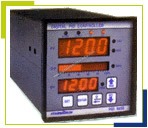
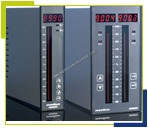
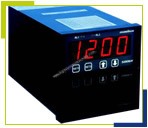
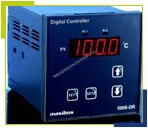
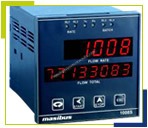
We are a illustrious name in this industry, indulged in manufacturing, exporting and supplying of a wide range of Electronic PID Controllers. These controllers are basically used in various industrial control systems for calculating any error. Offered controllers are manufactured under the stern guidance of our experienced professionals in compliance with the set industrial standards. Moreover, these controllers are checked on defined parameters to ensure their flawlessness. Moreover, our esteemed clients can avail these Electronic PID Controllers from us at competitive prices.
Features:
- Elevated service life
- Easy to install
- Rugged construction
- Less maintenance required
Other Specifications:
- One unit accepts many input types.
- Input and Output type field configurable.
- Configuration, Programming, Operation & Calibration by front panel keys.
- Three level security access by DIP switches.
- Independent display of set-point, process variable and control output/ value position.
- Remote set-point, Transmitter power supply & two configurable auxiliary relays.
- Digit shift key for speedier setting.
- RS232 / 485 communication port option for Remote Programming & Data Acquisition.
- Sealed membrane keyboard.
Versatile Control and Input FlexibilityThese PID controllers provide compatibility with a variety of sensor inputs, including multiple thermocouples, RTD (Pt100), voltage, and current signals. This broad input support, paired with programmable control modes, makes them suitable for diverse temperature, humidity, and process control applications across industries.
Robust Construction and Easy InstallationWith panel-mounted designs available in standard sizes (96x96, 48x48, 72x72, 48x96 mm), these controllers are built with sturdy ABS enclosures offering IP65 front protection. Installation is straightforward using screw terminals or plug-in sockets, ensuring long-term durability and resistance to industrial environments.
FAQ's of Electronic PID Controllers:
Q: How do I select the correct input type for my PID controller application?
A: Determine the type of sensor or process signal you are using (such as Thermocouple J, K, T, R, S; RTD Pt100; voltage; or current). Choose a controller model that supports your input type, which ensures accurate readings and effective process control.
Q: What control modes are available and when should I use each?
A: These controllers offer PID, On-Off, and Manual control modes. Use PID for precise automatic adjustments, On-Off for simple switching operations, and Manual when direct user control is needed; match the mode to your specific process requirements.
Q: Where are electronic PID controllers typically installed?
A: They are panel-mounted devices, making them ideal for integration into control cabinets within industrial and commercial facilities, such as manufacturing plants, laboratories, and processing units.
Q: What benefits does IP65 front protection provide?
A: IP65-rated front protection shields the controller against dust and water ingress, safeguarding the display and control panel in challenging industrial environments, which helps maintain long-term reliability.
Q: How many alarm outputs can be configured, and what is their purpose?
A: Models offer either two or four fully programmable alarms, which can be set for high/low process limits, system faults, or safety notifications, enhancing process safety and operational awareness.
Q: What accuracy can be expected from these PID controllers?
A: These controllers deliver high precision with an accuracy of 0.5% of full scale, enabling consistently reliable process control and reduced deviations in critical applications.

 Send Inquiry



 Send Inquiry


 Send Inquiry


